If This Is Acceptable to You, What Else Did You Do?
Look at that door.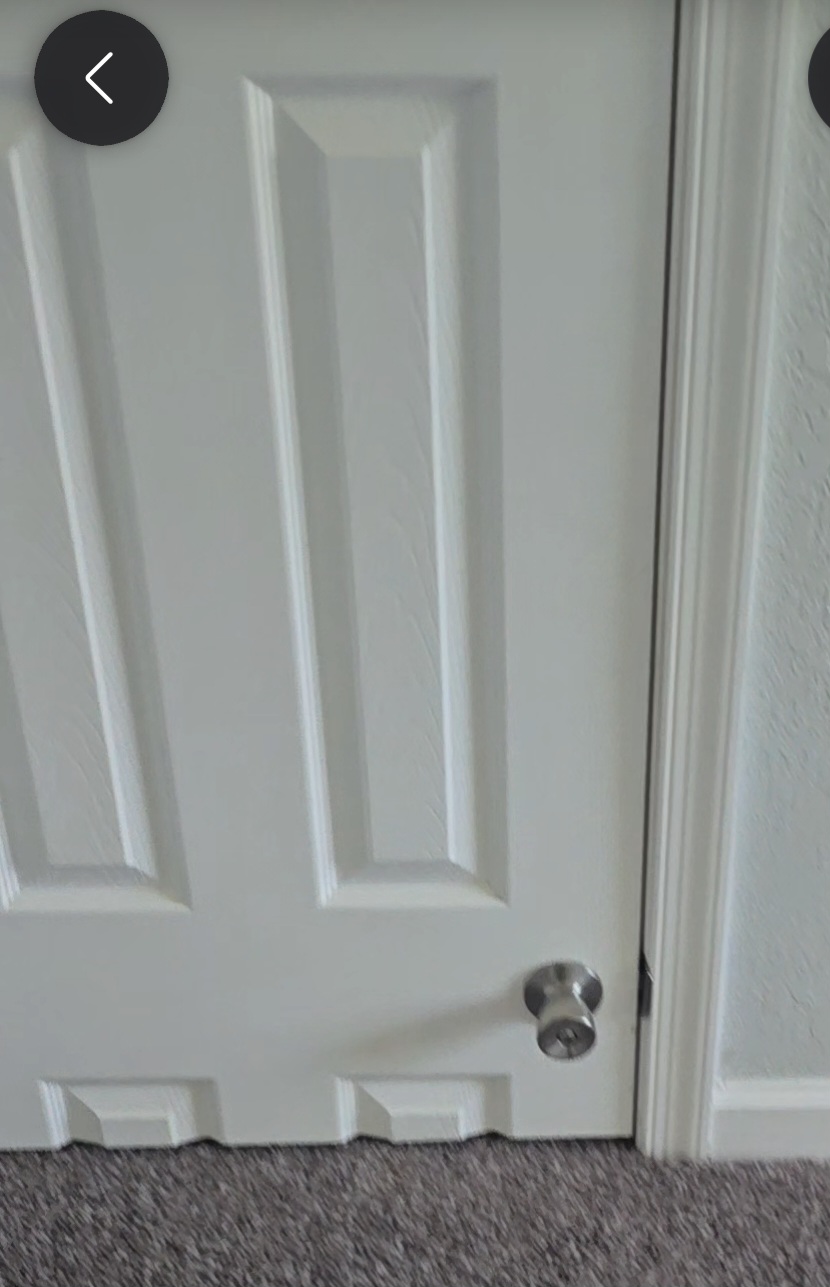
Take a real look at it.
The knob is at the floor because the bottom of the door was cut off. This was installed over a scuttle access — the entry point to attic storage, because somebody decided that cutting down a standard interior door was an acceptable substitute for doing the job correctly.
They painted it white. They hung it. They staged the house around it. And they put it on the market.
This is someone who either doesn’t know any better or doesn’t care. And in my experience, those two things produce the same outcome for the buyer.
The Question That Matters
I’m not going to spend a lot of time on this particular door. The door is almost beside the point.
The question that matters — the one I want every buyer in Hampton Roads to sit with — is this:
If this is what they’re willing to show, what did they do where no one can see?
Think about that for a moment.
This door is visible. It’s right there. Anyone walking through the house sees it. And whoever installed it looked at it, decided it was acceptable, and moved on.
So what happened behind the drywall? What happened in the crawl space? What happened at the electrical panel, at the gas lines, at the structural connections that hold this house together?
Because here’s what I know from 27 years of walking homes and a background in construction estimating and project management that most agents simply don’t have: workmanship is not compartmentalized. The people who take shortcuts you can see take shortcuts you can’t see. The contractors who consider this door finished work consider a lot of other things finished work too.
That’s not cynicism. That’s pattern recognition. And it’s the most important thing I can tell you about buying a flipped home right now.
What’s Happening in This Market
Not every flipper operates this way. I want to be clear about that, because there are investors in Hampton Roads doing quality work — people who take pride in what they produce and understand that a home is not a commodity to be dressed up and moved.
But I am seeing more of this. More cut corners. More cosmetic finishes over unaddressed problems. More renovation work that was never permitted — and we are not talking about trim work and paint. We are talking about gas piping. Electrical work. Structural repairs. The things that, when they go wrong, go catastrophically wrong.
Permits exist for a reason. They require inspections. Inspections require that the work meet code. When a contractor skips the permit on a gas line or an electrical panel, there is no inspection. No record. No accountability. And when something goes wrong after closing, it is the buyer’s problem — not the flipper’s.
Permit records by city:
🔗 Virginia Beach: permits.vbgov.com
🔗 Chesapeake: cityofchesapeake.net/government/city-departments/departments/development-and-permits
🔗 Norfolk: norfolk.gov/residents/permits-and-development
🔗 Suffolk: suffolkva.us/departments/community-development
🔗 Contractor licensing with DPOR: dpor.virginia.gov
According to Attom’s 2025 Home Flipping Report, flip profit margins hit 25.5% last year — the lowest since 2008. Margins ticking back up in 2026 means more investors returning to the market.
🔗 Attom 2025 Home Flipping Report: attomdata.com
Thinner margins and faster timelines produce exactly what you see in this photograph. And the homes coming to market right now reflect that pressure.
What Pride in the Workmanship Actually Looks Like
I think about the craftsmen I learned from early in my career. People who measured twice. Who came back to look at their own work not because someone was watching but because their name was on it. Who understood that a house is where someone’s life happens — where kids grow up, where families gather, where people feel safe — and treated it accordingly.
That standard still exists. It’s just not universal anymore.
When I work with a seller, the conversation about what to fix and how to fix it starts from that standard. Not what can we get away with. What would we be proud to show? What will hold up in five years, ten years, twenty years? What would the person who bought this house thank us for?
Those questions matter. The door in this photograph is evidence of what happens when nobody asks them.
What This Means If You’re Buying
If you are looking at a flipped home in Hampton Roads right now, you need someone walking through it with you who is going to ask those questions out loud — and know what the answers look like.
Not after the inspection. Before the offer. Because the inspection finds what it finds. A construction background finds the red flags before you come out of pocket for the EMD, the home inspection and/or the termite/moisture inspection.
And when I see a door like this one — a knob at the floor, a bottom cut off, painted white and presented as finished — I ask out loud: “if this is acceptable to them, what else did they do?”
That question has saved my buyers from a lot of expensive surprises.
If you’re considering a flipped home in Virginia Beach, Chesapeake, Norfolk, or Suffolk — walk it with me before you make an offer.
By Chris Faircloth
📞 757.288.0983
📧 AgentFaircloth@gmail.com
📅 agentfaircloth.com