What Hampton Roads Homeowners Need to Know About Deed Fraud — And the Free Virginia Alert System That Protects You.
By Chris Faircloth | The Agent Faircloth Team at Swell Realty Co.
Published June 2026 • Hampton Roads, Virginia
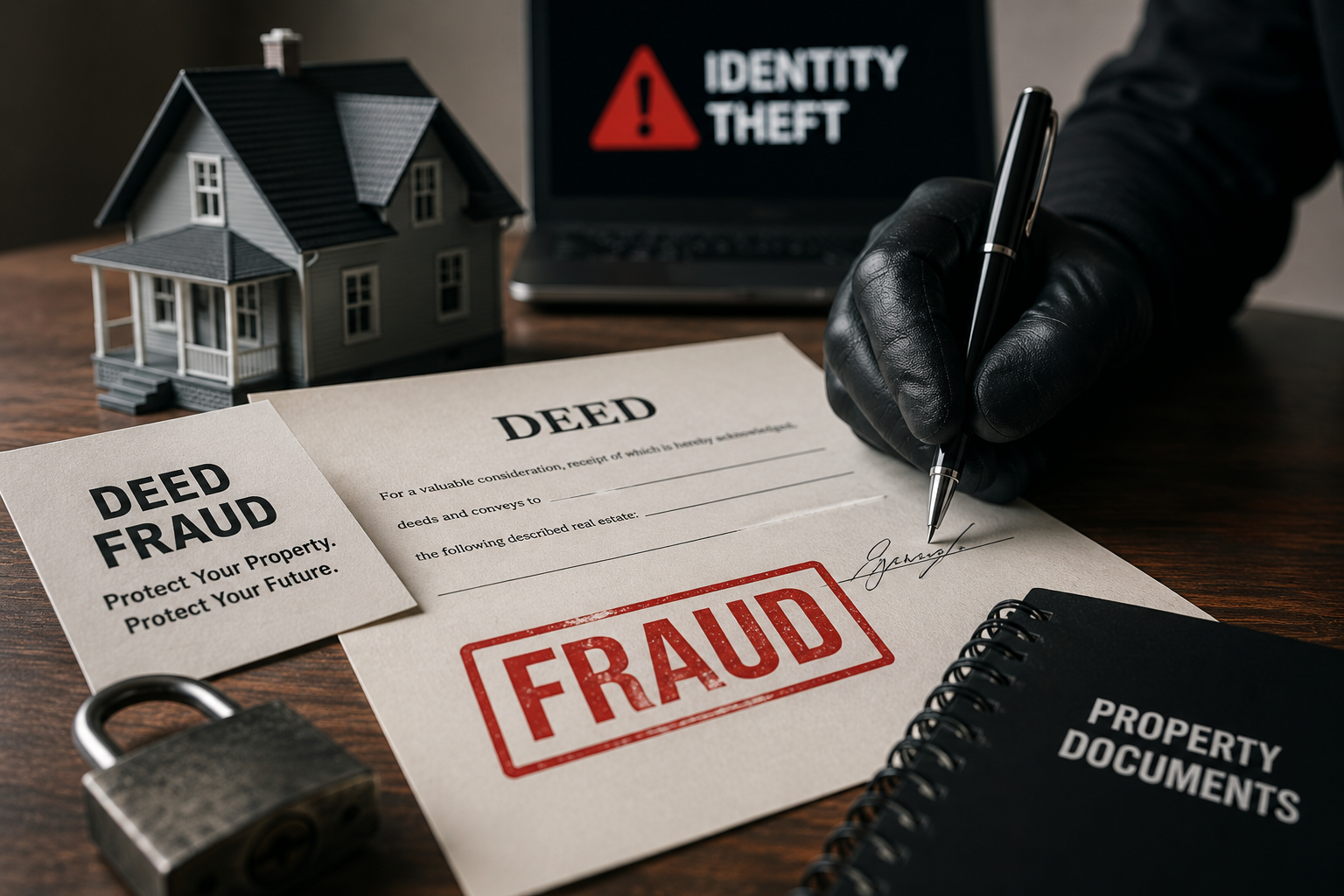
I’ve been selling Hampton Roads real estate since July 1999. I’ve seen a lot of things go wrong in transactions — bad inspections, title surprises, financing collapses. But the one that still stops me is deed fraud.
It is exactly what it sounds like: someone forges your signature on a deed, files it with the county, and transfers ownership of your home — to themselves or to a third party — without you knowing. You don’t find out until you try to sell, refinance, or get a piece of mail that doesn’t make sense.
And by then, the damage is done.
Virginia just passed new laws specifically designed to fight this — including a requirement that localities provide a free property alert notification system to every homeowner. Most homeowners in Virginia Beach, Chesapeake, Norfolk, and Suffolk have no idea this exists. This post is going to change that.
AT A GLANCE — DEED FRAUD IN VIRGINIA
Who is most at risk: Vacant land owners, senior homeowners, absentee owners, and high-tourism areas including Virginia Beach
The free protection: Virginia’s property alert systems notify you by email whenever a document is filed against your property
Source: Virginia REALTORS® — “New Laws Aim to Fight Deed Fraud” — published June 2, 2026 |
|---|
What Deed Fraud Actually Is — And How It Works
Deed fraud is a form of real estate title fraud. A criminal obtains your personal information, forges your signature on a deed of conveyance, and records it in the public land records at your county’s Circuit Court Clerk’s office. Once recorded, the forged deed creates a paper trail that appears to show a legitimate transfer of ownership.
From that point, the fraudster can attempt to sell the property, take out a loan against it, or simply sit on the title while you continue paying your mortgage — completely unaware that someone else now claims to own your home.
The fraud is made possible by a gap in the recording system: Circuit Court Clerks are required by law to record deeds that appear complete on their face. They do not verify the authenticity of signatures or the identity of the grantor. That verification step — the one that would catch the fraud — doesn’t happen at the point of recording.
Who Is Most at Risk
Any homeowner can be targeted, but certain property types and situations carry higher risk:
- Vacant land owners — no one is watching the property day to day
- Absentee owners — rental properties and vacation homes where the owner doesn’t receive local mail
- Senior homeowners — particularly those in assisted living or with diminished capacity
- Homeowners in high-tourism or high-demand markets — Virginia Beach is specifically identified in Virginia’s new legislation as a higher-risk area due to property turnover and out-of-state interest
- Recently inherited properties — title transitions during estate settlement create a window of vulnerability
- Properties with no mortgage — lenders typically monitor title activity; unencumbered properties have no lender watching
| WHY VIRGINIA BEACH IS SPECIFICALLY AT RISK
|
|---|
Virginia’s New Law: HB 163 and SB 316
In 2026, Virginia passed companion legislation — House Bill 163 and Senate Bill 316 — specifically targeting deed fraud. These bills represent the most significant legislative action Virginia has taken on this issue in years.
| Law | HB 163 / SB 316 — Virginia General Assembly, 2026 Regular Session |
| Signed into law | 2026 |
| Key provisions effective | July 1, 2026 (notification systems); additional provisions July 1, 2027 |
| What it requires | Localities must offer a property alert notification system to all property owners |
| Who administers it | Circuit Court Clerk’s offices in each city and county |
| Cost to homeowners | Free |
| Source | Virginia REALTORS® — virginiarealtors.org — published June 2, 2026 |
The core requirement of these bills is straightforward: Virginia localities must offer property owners a way to monitor their own land records and receive alerts when documents are filed against their property. The system doesn’t prevent fraud from being attempted — but it dramatically shortens the window between when fraud occurs and when you find out about it.
That window is everything. The faster you know, the faster you can act. And acting fast is what determines whether the damage is recoverable.
The Free Alert Systems — And How to Enroll Today
There are two systems operating across Hampton Roads right now. All four major cities are active. Every Hampton Roads homeowner can enroll today — for free — in less than five minutes.
System 1: Virginia Property Notification (Logan Systems)
This is the city-specific system operated through each municipality’s Circuit Court Clerk’s office. It sends email notifications whenever a document is recorded in the land records that includes the name you register.
System 2: VADeed Alert (Statewide — Virginia Supreme Court)
VADeed Alert is a statewide system developed and maintained by the Office of the Executive Secretary of the Virginia Supreme Court. It covers all Virginia localities from a single enrollment and sends email notifications when a document containing your specified name or Tax Map/Parcel ID number is recorded in land records anywhere in the state.
This is the backup and supplement to your city’s system — and particularly useful if you own property in multiple jurisdictions.
| VADEED ALERT — STATEWIDE ENROLLMENT URL: risweb.vacourts.gov/VADeedAlert/#/login Administered by: Office of the Executive Secretary, Supreme Court of Virginia Covers: All Virginia localities from one enrollment Monitor by: Your name, business name, or Tax Map/Parcel ID number Notifications: Email alerts when matching documents are recorded Cost: Free This is the single fastest enrollment option if you want statewide coverage right now. |
|---|
What These Systems Do — And What They Don’t Do
Before you enroll, it’s important to understand exactly what these alert systems accomplish — and where their limits are.
| WHAT THEY DO | Send you an email alert when a document is recorded in land records that matches your registered name or parcel ID number |
| WHAT THEY DON’T DO | Prevent fraud from being attempted or a forged deed from being recorded — the Clerk is legally required to record documents that appear complete on their face |
| WHAT THEY DON’T DO | Validate the legal authenticity of any document — they are notification tools, not verification tools |
| WHY THEY MATTER | The faster you know a fraudulent document has been filed, the faster you can engage an attorney, contact the Clerk’s office, and take legal action to protect your title |
| NEXT STEP IF ALERTED | Contact a real estate attorney immediately — do not wait. You will also want to notify your title insurance company if you have a policy in force |
What Every Hampton Roads Homeowner Should Do This Week
This is not a ‘get to it eventually’ situation. Deed fraud is not common — but it is irreversible if you don’t catch it early. Here’s the exact sequence I’d recommend:
- Enroll in your city’s property notification system today. Virginia Beach, Chesapeake, Norfolk, and Suffolk all have active systems. Links are listed above. It takes five minutes.
- Also enroll in VADeed Alert at risweb.vacourts.gov/VADeedAlert — this gives you statewide coverage and a second layer of notification. Free, separate from your city system.
- Register your property by name AND by Tax Map/Parcel ID number if the system allows both. Using both identifiers closes more gaps.
- If you own multiple properties — including vacant land, rental properties, or inherited parcels — enroll each one separately. Vacant land is a primary target.
- Check your existing title insurance policy. If you don’t have an owner’s title insurance policy in force, this is the moment to consider one. Lender’s title insurance only protects the lender — not you.
- Tell someone you trust. Seniors and absentee owners are the highest-risk categories. If you have an aging parent who owns property in Hampton Roads, enroll them. Today.
A NOTE ON TITLE INSURANCE
|
|---|
If You Suspect Deed Fraud Has Already Happened
If you receive an alert — or if you discover a suspicious document in your land records through any other means — here is the immediate sequence:
- Contact a real estate attorney in Virginia immediately. This is not something to handle yourself. Title fraud involves criminal law, civil remedies, and court filings that require professional legal representation.
- Contact the Circuit Court Clerk’s office in the city where the document was recorded and notify them of the suspected fraud.
- File a police report. Deed fraud is a criminal act. A police report creates an official record and is often required by your title insurer.
- Notify your title insurance company if you have an owner’s policy. They will open a claim and assign a defense attorney.
- Do not attempt to file a corrective deed yourself without legal guidance. The process for clearing fraudulent title requires specific legal filings and must be done correctly to be effective.
IMPORTANT: ACT FAST
|
|---|
Why I’m Talking About This
Real estate agents aren’t required to tell you about deed fraud. It’s not in a listing presentation. It doesn’t come up at the closing table. And because most people never experience it, it doesn’t feel urgent — until it is.
I’ve been in Hampton Roads since July 1999. I’ve seen what happens when people don’t know their rights or their risks until it’s too late. That’s not the kind of agent I am.
90% of my business comes from people who trust me enough to send their family and friends my way. That trust is built by telling people what they need to know — not just what closes deals.
This is what you need to know.
HAVE QUESTIONS ABOUT YOUR PROPERTY?
|
|---|
Sources & Further Reading
Every claim in this post is sourced from official legislation or government resources. Verify anything here directly before making legal or financial decisions.
- Virginia REALTORS® — “New Laws Aim to Fight Deed Fraud”: virginiarealtors.org — published June 2, 2026
- Virginia HB 163 / SB 316 — General Assembly 2026 Session: law.lis.virginia.gov
- VADeed Alert — Virginia Supreme Court Statewide System: risweb.vacourts.gov/VADeedAlert/#/login
- Virginia Beach Property Notification Enrollment: virginiapropertynotification.org/Description?AgencyId=43
- Chesapeake Circuit Court Clerk — Property Notification: cityofchesapeake.net/1126/Circuit-Court-Clerk
- Suffolk Property Notification Enrollment: virginiapropertynotification.org/Description?AgencyId=48
- Norfolk Property Notification Enrollment: virginiapropertynotification.org/Description?AgencyId=47
Note: This post is provided for informational purposes only and does not constitute legal advice. If you suspect deed fraud has occurred on your property, contact a licensed Virginia real estate attorney immediately.