Here’s What Senate Bill 531 Means If You Own Property in Hampton Roads.
By Chris Faircloth | The Agent Faircloth Team at Swell Realty Co.
Published June 2026 • Hampton Roads, Virginia
I’ve been in Hampton Roads real estate since July 1999. I came up through construction. In 26 years, I have watched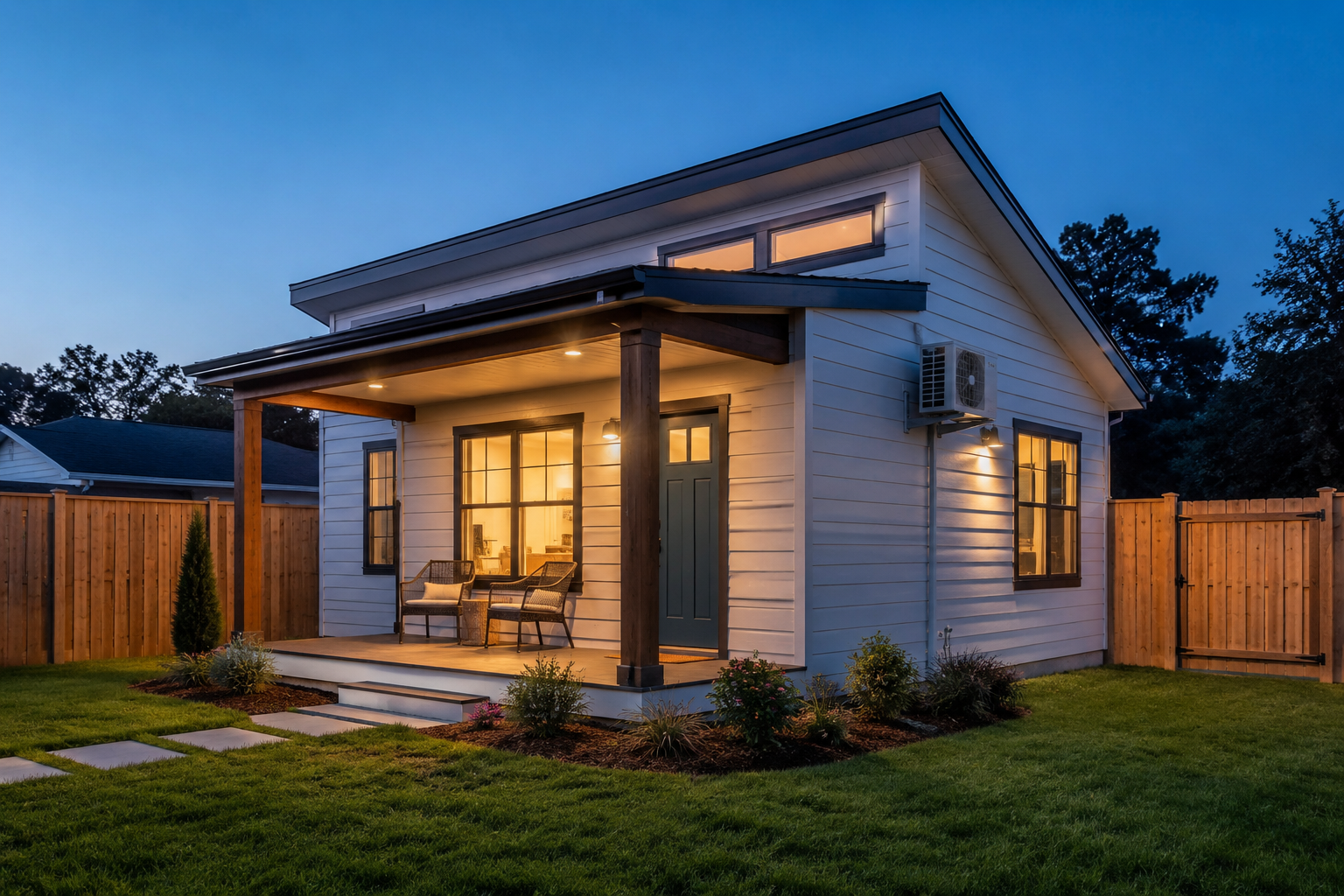 a lot of legislation come through Richmond that got labeled a ‘game changer’ and quietly fizzled out.
Senate Bill 531 is not that.
This law is real, it’s specific, and it directly affects what you’re allowed to do with your property — whether you own a home in Virginia Beach, Chesapeake, Norfolk, or Suffolk. If you own real estate in Hampton Roads, you need to understand what this bill says before your neighbors do.
What the Law Actually Says
Before SB531, building a detached guest cottage, garage apartment, or in-law suite on your property was heavily restricted — or outright prohibited — in most Virginia localities. Local zoning ordinances had the authority to block these projects, and most did.
That authority is now significantly curtailed.
Starting July 1, 2027, every city and county in Virginia — including Virginia Beach, Chesapeake, Norfolk, and Suffolk — must allow homeowners to build a detached Accessory Dwelling Unit (ADU) on a qualifying single-family residential lot. By right. Without requiring special use permits or board of zoning appeals hearings.
The Key Provisions
- Detached ADUs must be permitted by right in single-family residential zoning districts statewide
- Permit fees cannot exceed $500
- Setback requirements for an ADU cannot be more restrictive than those applied to the primary dwelling on the same lot
- Localities cannot require a blood or legal relationship between the occupant of the ADU and the occupant of the main house
- Homeowners may rent the ADU to anyone — including strangers, tenants, or short-term guests (subject to local short-term rental rules)
Source: Virginia Senate Bill 531 — Full Legislative Text
The Part That Surprised Me When I Read the Bill
Most people who’ve heard about this law assume there’s a family occupancy requirement — that you can build the unit, but only a relative can live there.
That assumption is wrong.
Virginia specifically removed that restriction. The bill prohibits localities from requiring any family relationship between the person living in the ADU and the person living in the primary home. That means you can rent your backyard cottage to a tenant. You can list it on a rental platform (subject to your city’s short-term rental rules). You can use it as an income-producing unit on property you already own.
For Hampton Roads homeowners, that’s a meaningful distinction.
| WHAT THIS MEANS FOR YOUR PROPERTY VALUE A legally permitted, income-producing ADU is not the same asset as a home without one. At $1,200/month rental income, that’s $14,400/year from land you already own — and a materially different value proposition for future buyers. The homeowners who move before July 2027 — whether planning a build or understanding the value impact now — will be in a different position than the ones who wait. |
|---|
What Local Governments Can Still Control
SB531 is a significant preemption of local zoning authority — but it is not a blank check. Local jurisdictions retain meaningful regulatory control in several areas:
| Short-Term Rentals | Localities may require minimum lease terms (e.g., 30-day minimums) for ADUs and regulate short-term rental registration separately from the building permit process. |
| Owner-Occupancy | Local governments may require the primary homeowner to live on the property — either in the main house or the ADU — preventing purely corporate or investor-owned ADU scenarios. |
| Design Standards | Localities retain authority over design, aesthetics, and building code compliance, provided those standards are not more restrictive than what applies to the primary dwelling. |
| HOA Covenants | State zoning preemption does not override private HOA CC&Rs. If your property is in a homeowners association, your ADU rights under SB531 may still be limited by your HOA’s governing documents. |
| Short-Term Rental Registration | Virginia Beach and other Hampton Roads cities have separate registration requirements for short-term rentals. An ADU rented on platforms like Airbnb may require a separate registration process with the city. |
| IMPORTANT: HOA HOMEOWNERS READ THIS FIRST If your property is subject to a homeowners association, your CC&Rs may still prohibit ADU construction — even after SB531 takes effect. Virginia’s zoning preemption applies to government-imposed zoning rules. It does not override private contractual agreements between homeowners and their HOA. Amending HOA restrictions to allow ADUs typically requires a supermajority vote of homeowners in the community — a separate process entirely from the state law. Before you plan or budget for an ADU, check your HOA’s governing documents first. |
|---|
What This Means for Virginia Beach, Chesapeake, Norfolk, and Suffolk
Each Hampton Roads city currently has its own approach to ADU permitting — and in most cases, the existing rules are more restrictive than what SB531 will require. That gap is where the opportunity lives.
Virginia Beach
Virginia Beach’s current zoning ordinance limits ADUs significantly by district and lot size. SB531 will require the city to expand ADU access to qualifying single-family lots that are currently excluded. Homeowners with larger lots in residential zones — particularly in western Virginia Beach — stand to benefit most.
Planning & Zoning questions: 757-385-4621 | Permits & Inspections: 757-385-4211
Chesapeake
Chesapeake’s sprawling geography — with large residential lots across much of the city — makes it one of the most ADU-ready markets in Hampton Roads once the law takes effect. Homeowners with detached garages, workshops, or large lots should pay particular attention.
Norfolk and Suffolk
Norfolk’s dense urban fabric and older housing stock present different ADU opportunities than Virginia Beach or Chesapeake — particularly for homeowners with detached garages or large rear lots. Suffolk’s growth corridors and newer residential subdivisions will see varying lot suitability depending on size and existing structures.
What Hampton Roads Homeowners Should Do Before July 2027
The law doesn’t take effect for over a year. That’s your window to get ahead of it. Here’s what I’d actually do if I owned a property in Hampton Roads right now:
- Find out your lot size and current setback requirements. Some lots can support a detached ADU easily. Some can’t. Know which one you are before you spend money on plans.
- Look at your existing detached structures. A garage, a workshop, a storage building — any of these could be the foundation of a future ADU depending on size, placement, and condition.
- Check your HOA’s governing documents if you’re in a community association. Your ADU rights under state law don’t begin until your HOA’s private restrictions are addressed — and that’s a separate process.
- Talk to a real estate professional before you talk to a contractor. The order matters. You need to know whether building an ADU raises your property value enough to justify the cost before you spend money on architectural drawings.
- Understand your short-term rental rules if your plan involves anything other than a long-term tenant. Virginia Beach and other Hampton Roads cities have separate registration requirements for short-term rentals.
| A NOTE FROM CHRIS I have a construction background that most real estate agents don’t have. When I walk a property with you, I’m not just looking at what it is — I’m reading what it could be… There’s no obligation. Just real information from someone who’s been in this market since 1999 and actually read the bill. Call or text: 757.288.0983 Or book a time: agentfaircloth.com |
|---|
Sources & Further Reading
Every claim in this post is backed by the actual legislation or official government resources. Here’s where to go to verify:
- Virginia SB531 — Full Bill Text: lis.virginia.gov/bill-details/20261/SB531
- Virginia REALTORS® — New Laws Effective July 1, 2027: virginiarealtors.org
- Virginia Beach Planning & Zoning: planning.virginiabeach.gov
- Virginia Beach Permits & Inspections: virginiabeach.gov — Permits
- Chesapeake Planning Dept.: cityofchesapeake.net — Planning
Note: This blog post is provided for informational purposes only and does not constitute legal or financial advice. Always verify current bill status, local zoning rules, and HOA governing documents with appropriate professionals before making property decisions.